
NEXUS
The integration domain connecting platforms, operators, data, autonomy and mission software.
Nexus is ECADSOL’s multi-domain C2/C4ISR architecture: the governed integration layer that connects physical platforms, sensors, operators, data services and mission applications across air, land, maritime, subsea, stratospheric and digital environments. It is designed to allow information, tasking and mission services to move through defined interfaces without locking the customer into a single platform family. Through Nexus, ECADSOL and third-party systems can be integrated into a common mission environment, supporting interoperability, data fusion, operational control, assurance and through-life adaptability.
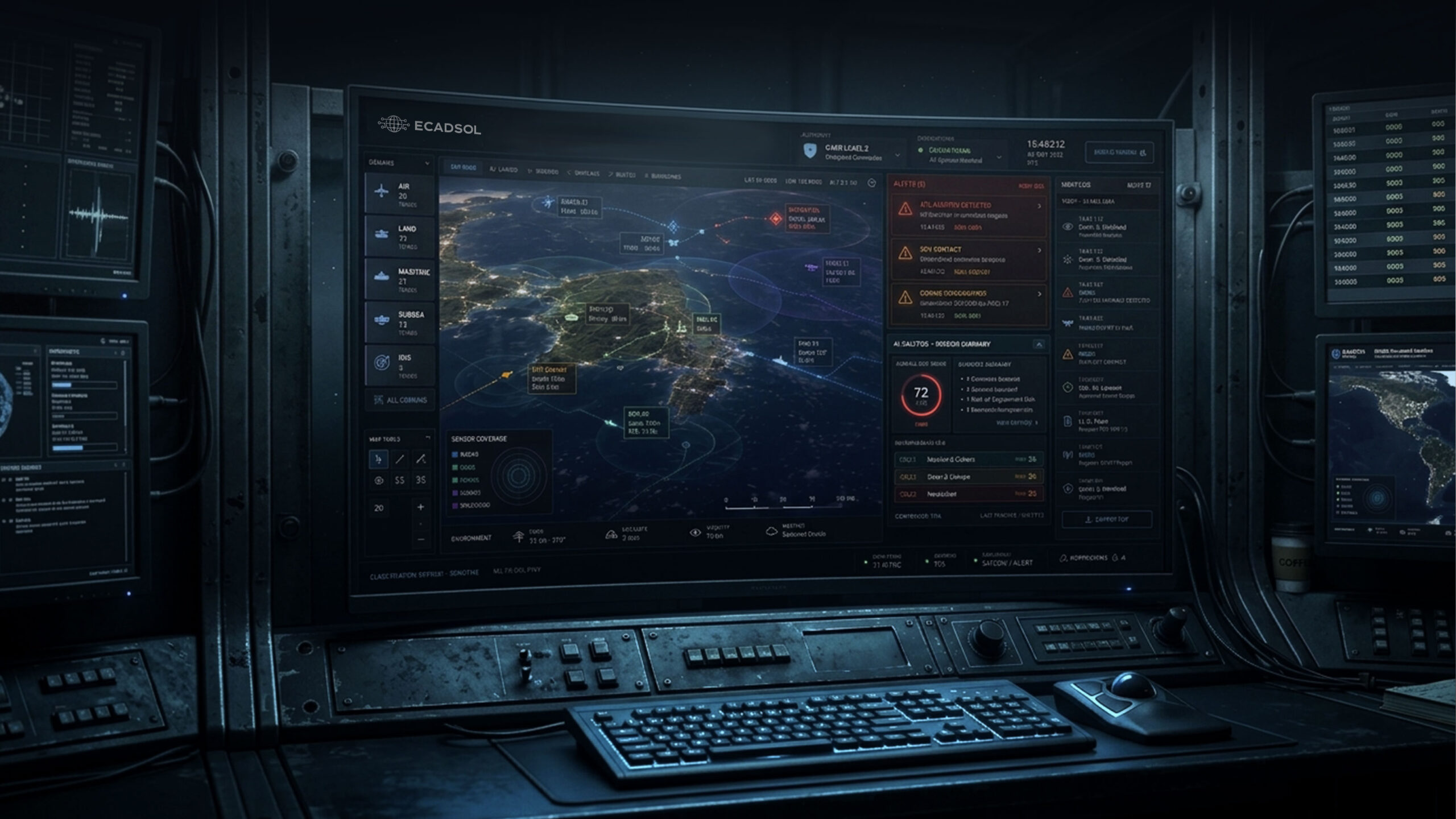
OSIRIS - ARGUS
Multi-Domain Command, Intelligence & Mission Governance System
OSIRIS is ECADSOL’s multi-domain command, intelligence and mission
governance system, designed to give operators a unified view of platforms,
sensors, tracks, alerts and mission activity across air, land, maritime, subsea,
stratospheric and digital environments. Built within the Nexus architecture,
OSIRIS supports Common Operating Picture visualisation, data fusion, anomaly
assessment, mission planning, authority-gated decision support and auditable
operational workflows. It helps commanders and operators move from
fragmented information to governed, evidence-based action.
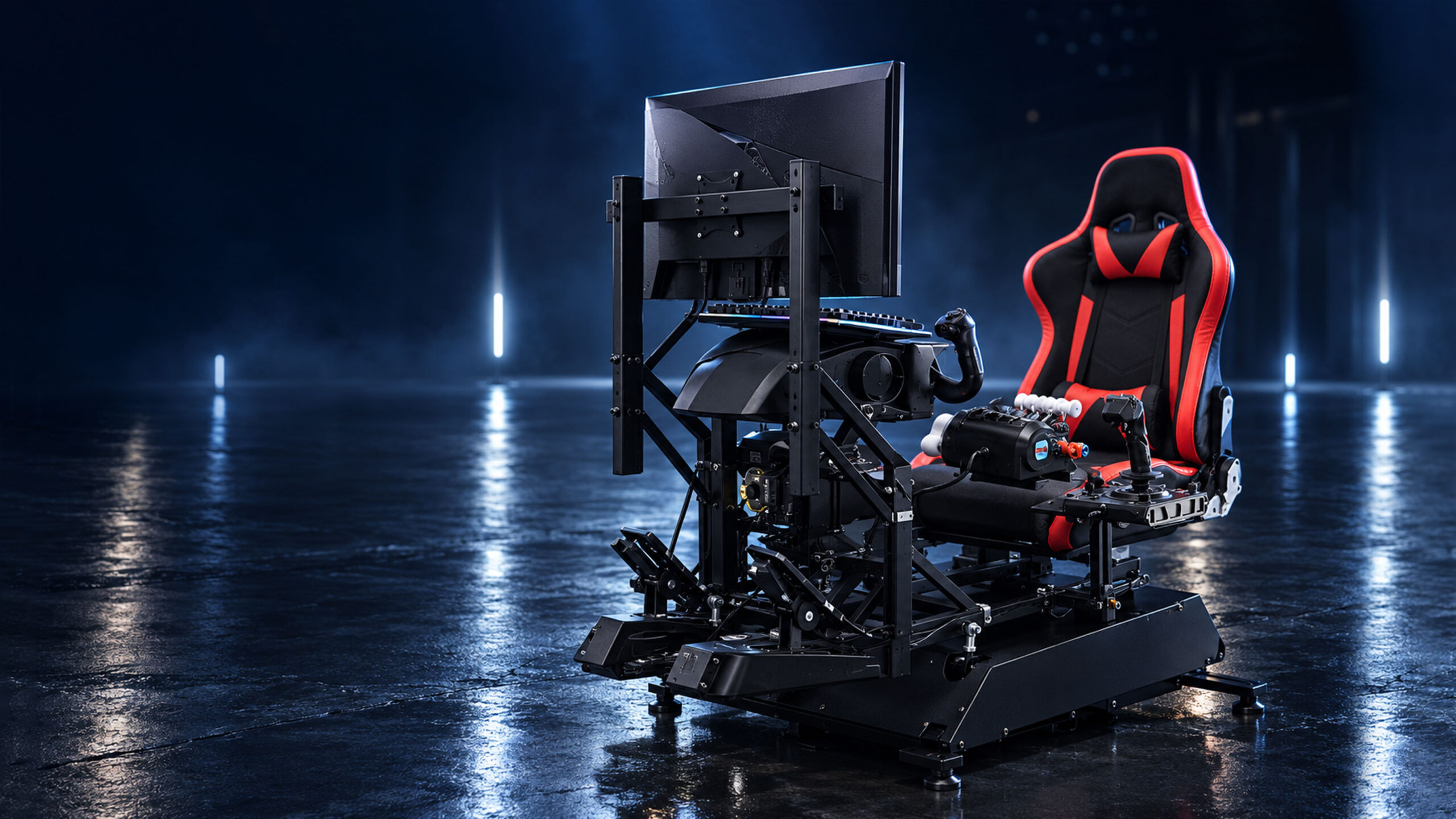
HELM-X - VANTAGE
Deployable Immersive Multi-Domain Control System
HELM-X (Human-Enhanced Link & Mission eXperience) is ECADSOL's
next-generation, sovereign-controlled mission command environment,
engineered to transform how humans command, interact with and
supervise autonomous systems across air, land, surface and subsurface
domains. Combining immersive 3D mission visualisation, real-time telemetry
fusion, virtual instrumentation, intuitive voice and gesture controls, and
AI-assisted decision support, HELM-X is designed to replace fragmented,
platform-specific interfaces with a unified, intelligent and highly adaptable
operator experience. Built for rapid deployment, mission resilience and
human-centred command authority, HELM-X operates as a standalone
platform by design, with planned integration into OSIRIS AI-OS to unlock
advanced autonomous mission coordination wherever operations demand it.
MULTI-DOMAIN COMMAND, INTELLIGENCE & MISSION GOVERNANCE
Cyber
Security engineered into the architecture, interfaces and lifecycle.
Nexus cybersecurity is based on secure-by-design principles, least-privilege access, controlled interfaces, software and configuration integrity, data protection and resilient operating modes. Detailed threat models and security controls are programme-specific and are not published on the public website. Design intent includes encryption, access control and network segmentation proportionate to the programme security architecture.
Central Command & Control (C2)
A unified operational picture and tasking layer for connected autonomous systems.
The Nexus C2 concept is intended to help authorised operators view system status, mission information and relevant sensor outputs, plan or approve tasks, and supervise connected autonomous assets across multiple domains. The design intent includes role-based control, event and alert handling, mission history, auditability and interoperability with approved external systems.
Command, Control, Communications, Computers and Intelligence (C4I)
Connect information to decisions through governed services and interfaces.
Nexus C4I capability is conceived as a set of interoperable services for information exchange, command workflows, data fusion and mission coordination. ECADSOL will tailor interfaces to the customer environment and applicable security architecture rather than claim a universal replacement for existing sovereign C4I systems.
Avionics & Subsystems
Controlled integration of vehicle, mission and payload electronics.
ECADSOL designs avionics and subsystem interfaces around modularity, power and data constraints, timing, environmental conditions, software configuration and testability. The objective is predictable integration and upgrade, supported by defined interface control and evidence.
Simulation Systems
Use simulation to reduce uncertainty before physical test and deployment.
Simulation can support concept evaluation, mission rehearsal, operator training, software test, autonomy evaluation and verification. ECADSOL tailors the fidelity to the decision or evidence need so simulation remains an engineering tool rather than an end in itself. Simulation and hardware-in-the-loop methods may be used to support architecture development, verification and training where appropriate to programme maturity.
Payload Systems
Mission payloads treated as controlled modules within the wider architecture.
Payload integration considers mechanical fit, power, data, timing, environmental limits, software interfaces, operator workflow and verification. The same principles support sensors, communications equipment and other mission modules where legally and technically authorised. ECADSOL's broader design intent is a modular mission-kit architecture in which payload changes remain controlled through defined interfaces and configuration management rather than ad hoc field modification.
Network-centric Software
Software services that allow systems to share data and coordinate through open, governed interfaces.
Nexus is intended to support distributed mission services, edge processing, platform integration and data exchange across resilient networks. Architecture decisions prioritise interoperability, security, observability, configuration control and the ability to integrate customer-owned or partner systems. Open, documented interfaces are preferred where feasible to support integration with authorised third-party or allied systems and reduce unnecessary dependency on closed proprietary architectures.